


Best overall: Satin Ice Rolled Fondant. Best for beginner practice: Wilton Decorator Preferred Fondant. Best for colored decorations: Renshaw Ready to Roll Icing. Best for warm, humid conditions: Massa Ticino Tropical. These are the best fondant brands for cake decorating to consider in 2026, organized by the job you need them to do.
- Satin Ice Rolled Fondant is the default choice for covering cakes and making simple decorations.
- Wilton Decorator Preferred Fondant suits beginner rolling, cutting, and covering practice.
- Renshaw Ready to Roll Icing suits colored decorations; Massa Ticino Tropical targets warm, humid working conditions.
- Cakedecorationguide provides cake decorating instructions for home bakers, not ready-to-use fondant.
Why this matters
Fondant is a sugar-based covering that you knead, roll, and lay over a prepared cake. It also works for cutout shapes and simple decorations. Buying a suitable fondant helps, but a smooth finish still depends on your cake surface and handling.
For your first fondant cake in 2026, choose one covering and one simple design. Changing brands, colors, and techniques together makes it harder to identify what needs fixing. Cakedecorationguide offers downloadable cake decorating guides for home bakers who want instructions alongside their practice.
Start with a small cake and a plain covering before attempting figures, flowers, or stacked tiers. You will have fewer moving parts and a clearer view of your progress.
What makes the best fondant for cake decorating?
Use these criteria before choosing a brand:
- Intended use: Choose rolled fondant for covering cakes. Pouring fondant and gum paste serve different purposes.
- Working conditions: Consider whether your kitchen is cool and dry or warm and humid. Fondant handling changes with moisture and temperature.
- Color plan: Decide whether you want white fondant to color yourself or ready-colored fondant for decorations.
- Eating experience: Taste a piece with your cake and filling before committing to a celebration cake.
- Handling: Look for a fondant that you can knead, roll, lift, and smooth comfortably. Practice reveals this better than packaging claims.
- Label requirements: Read the exact package for ingredients, allergens, storage instructions, and any dietary certification you need.
There is no single fondant that removes the need for preparation. A lumpy buttercream layer remains a problem beneath a sugar covering, regardless of the brand.
Best fondant brands at a glance
| Fondant | Best for | Standout feature | Key limitation |
|---|---|---|---|
| Satin Ice Rolled Fondant | General cake covering | Rolled fondant for coverings and simple decorations | Delicate upright decorations need a different material or added support |
| Wilton Decorator Preferred Fondant | Beginner practice | Ready-to-use fondant for rolling, cutting, and covering | It does not replace a smooth underlying frosting layer |
| Renshaw Ready to Roll Icing | Colored cutouts and accents | Ready-colored rolled icing options | Ready-made colors still need checking against your design |
| Massa Ticino Tropical | Warm, humid working conditions | A fondant formulation intended for tropical conditions | It does not prevent condensation on a cold cake |
These are distinct starting points, not claims that one brand wins every task. For a simple covered cake, start with Satin Ice. For colored accents on a buttercream cake, start with Renshaw.
1. Satin Ice Rolled Fondant: best for general cake covering
Satin Ice Rolled Fondant is a ready-to-use sugar covering for cakes and simple decorations. Knead it until workable, roll it into a sheet, and smooth it over a prepared cake. It is the default recommendation here because covering and basic cutouts are the core tasks most beginners need.
Keep your first design plain. A single-color cake with a few flat shapes teaches you more about rolling and smoothing than a design that adds sculpting at the same time.
Satin Ice Rolled Fondant pros:
- Suits both cake covering and simple cutout decorations.
- Lets you practice a continuous sheet rather than building a covering from separate pieces.
- Works as a starting material for learning kneading, rolling, lifting, and smoothing.
Satin Ice Rolled Fondant cons:
- Rolled fondant alone is not the right default for thin, upright petals or unsupported structures.
- Flavor preference remains personal; taste it with your cake before choosing it for guests.
Best for: Home bakers making a straightforward fondant-covered celebration cake in 2026.
Verdict: Buy Satin Ice Rolled Fondant for your first plain covered cake. Keep the design simple so you can focus on technique.
2. Wilton Decorator Preferred Fondant: best for beginner practice
Wilton Decorator Preferred Fondant is ready-to-use rolled fondant for covering cakes and making decorations. Use it to practice rolling an even sheet, cutting shapes, and smoothing a covering. Those exercises matter more than a complicated finished design when you are learning.
Give each practice session one purpose. For example, work on lifting the sheet without stretching it before you spend time on decorative details.
Wilton Decorator Preferred Fondant pros:
- Supports basic covering and cutout exercises with the same material.
- Does not require you to make fondant from scratch before practicing.
- Suits a small, repeatable practice design with simple shapes.
Wilton Decorator Preferred Fondant cons:
- A ready-made fondant still needs conditioning and careful handling.
- Uneven frosting beneath the covering can show through; the brand cannot correct the cake surface.
Best for: Beginners practicing the steps of fondant decorating before making an event cake.
Verdict: Buy Wilton Decorator Preferred Fondant for focused practice. Skip the elaborate design until you can roll, lift, and smooth confidently.
3. Renshaw Ready to Roll Icing: best for colored decorations
Renshaw Ready to Roll Icing is rolled sugar icing used for cake coverings and decorations. Its ready-colored options make it a useful choice when your design depends on separate colored shapes. Think flat flowers, dots, leaves, or lettering rather than a complicated modeled figure.
Plan your colors together before cutting. A color that looks right on its own can look different beside your frosting or other decorations.
Renshaw Ready to Roll Icing pros:
- Ready-colored options let you begin without mixing every color yourself.
- Suits flat accents on either fondant-covered or buttercream cakes.
- Lets you separate color planning from learning how to roll and cut.
Renshaw Ready to Roll Icing cons:
- A ready-made color is not a guarantee of an exact match to a reference image.
- Rolled icing is not a substitute for flower paste when you need delicate petals that hold their shape.
Best for: Home bakers adding colored cutouts to a simple cake design in 2026.
Verdict: Buy Renshaw Ready to Roll Icing for planned colored accents. Check the colors together before decorating the cake.
4. Massa Ticino Tropical: best for warm, humid conditions
Massa Ticino Tropical is a rolled fondant formulated for working in tropical conditions. It is the climate-focused option in this list. Consider it when warmth and humidity are central to your decorating setup rather than choosing on color alone.
The formulation does not remove the need to manage your workspace. Moisture on a cake surface and damp tools still interfere with neat handling.
Massa Ticino Tropical pros:
- Has an intended use tied specifically to tropical working conditions.
- Suits cake covering when climate is your main selection criterion.
- Gives you a climate-focused alternative to general-purpose rolled fondant.
Massa Ticino Tropical cons:
- It does not stop condensation when a cold cake meets warm, humid air.
- It does not replace a suitable cake structure or a smooth base coat.
Best for: Decorators choosing fondant specifically for a warm, humid workspace.
Verdict: Buy Massa Ticino Tropical when climate drives your choice. Hold off on switching brands if your main problem is an uneven cake surface.
How to practice with your chosen fondant
Use the same small cake design when comparing fondants in 2026. A repeatable exercise helps you notice handling differences without confusing them with a new cake shape or decorating technique.
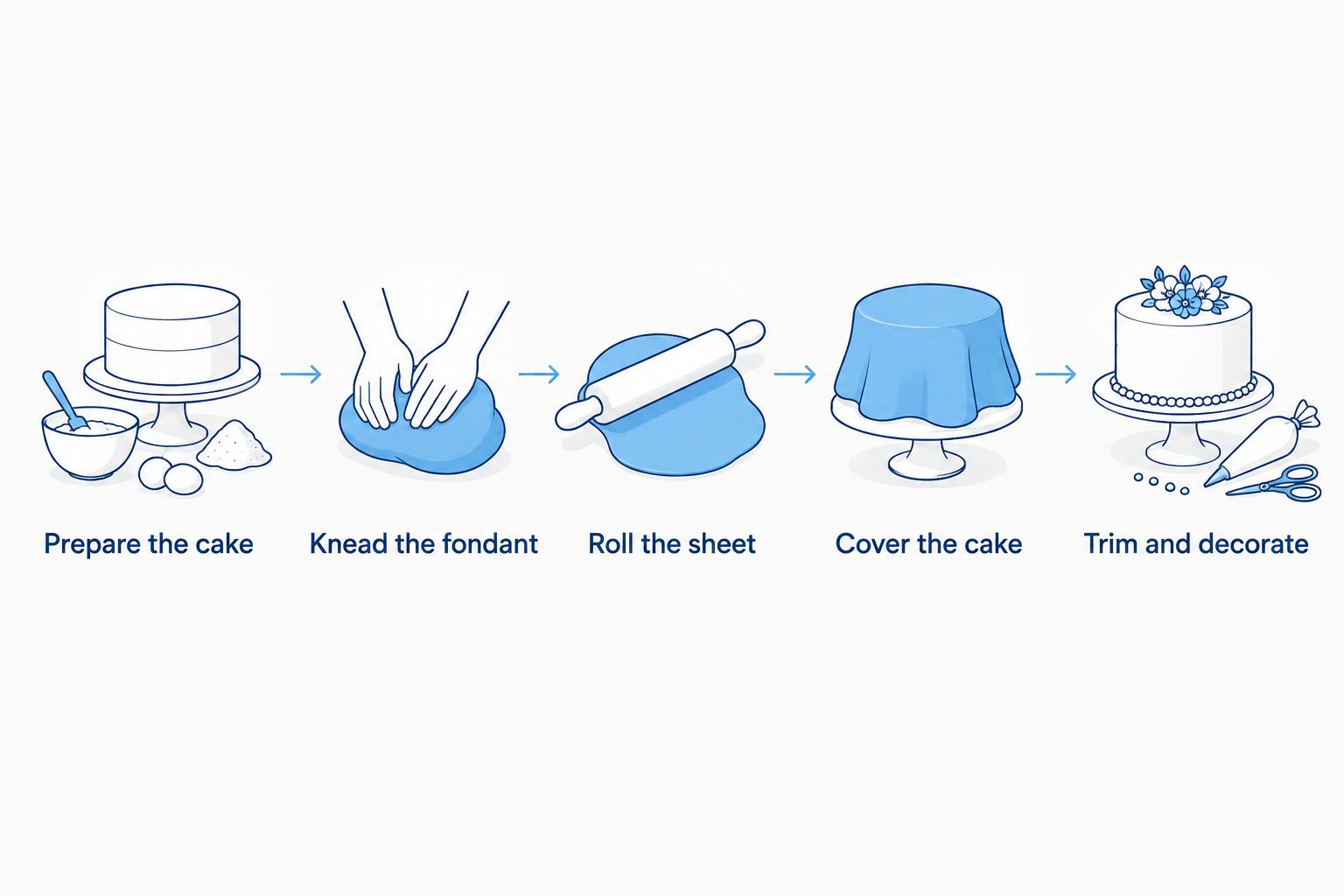
Prepare the cake
Start with a level cake and a smooth, firm buttercream surface. A crumb coat is a thin frosting layer that traps loose crumbs; finish the base according to your frosting method before adding fondant. Keep crumbs and loose frosting off your rolling surface.
Knead the fondant
Work a manageable piece until it feels evenly pliable. Follow the package instructions rather than adding water, shortening, or other ingredients automatically. Keep the portion you are not using covered so its surface does not dry out.
Roll the sheet
For a beginner exercise, aim for an even sheet about 3 mm thick, then adjust to the manufacturer's instructions and your design. Rotate the fondant as you roll and check that it is not sticking. Use only enough suitable dusting material to release it.
Cover the cake
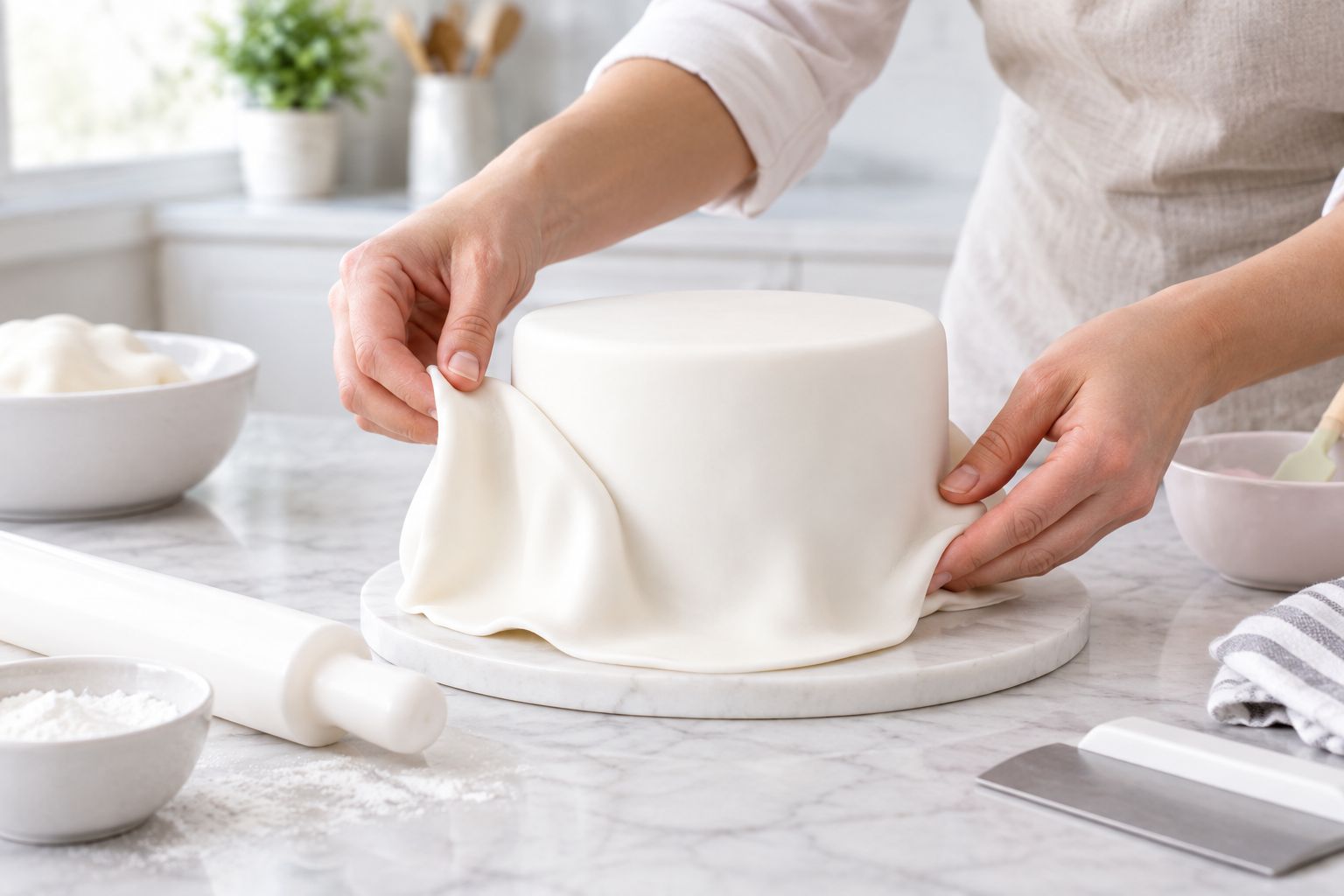
Lift the sheet without pulling it thin. Center it over the cake, smooth the top, then gently open the folds around the sides before smoothing them down. Do not press a pleat flat against the cake; separate it first.
Trim and decorate
Trim the excess at the base after the sides are smooth. Add a few flat decorations rather than several new techniques. Check the covering before adding accents so you do not hide a problem you still need to fix.
For a 6-inch-wide cake that is 3 inches tall, the sheet must span at least 12 inches across to reach down both sides. Roll beyond that minimum to leave room for positioning and trimming. This is a geometry check, not a brand-specific performance claim.
Mistakes to avoid before changing brands
Fix the process before replacing the fondant. Start with the point where the problem appears: on the work surface, during lifting, or after the sheet reaches the cake.
- Sticking while rolling: Check the surface and use a light, even dusting rather than repeatedly forcing the sheet loose.
- Tearing while lifting: Support the sheet and avoid stretching it. Check for unevenly thin areas.
- Pleats around the base: Lift and open the folds gently before smoothing downward.
- Crumbs in the covering: Clean the workspace and prepare the frosting layer before rolling.
- Dry edges: Keep unused fondant covered and avoid leaving the rolled sheet exposed while finishing other tasks.
When smoothing the sides, work with one loose fold at a time. Hold the fondant away from the cake gently, open the fold, and smooth the released area without pulling downward.
Cakedecorationguide's Fondant Basics Guide covers kneading, rolling, coloring, and covering a cake. The Troubleshooting Cake Decoration Guide addresses problems including cracked fondant and sliding frosting. Both are instructional downloads, not edible decorating materials.


How the recommendations are ranked
The order follows beginner use cases: general covering first, practice second, colored accents third, and climate-specific handling fourth. The criteria are intended use, working conditions, color planning, eating experience, handling, and label requirements. The ranking is not a blind taste-test result or a measured durability comparison.
Which fondant should you choose?
Choose Satin Ice Rolled Fondant if you want one default for a simple covered cake. Choose Wilton Decorator Preferred Fondant for focused practice, Renshaw Ready to Roll Icing for colored cutouts, or Massa Ticino Tropical when warm, humid conditions drive the decision.
For your next cake in 2026, write down the design before buying ingredients: full covering or accents, plain or colored, flat or upright. That short plan keeps you from choosing a material for a job it is not meant to do.
FAQ
What's the best fondant brand for a beginner?
Satin Ice Rolled Fondant is the default recommendation for a beginner covering a simple cake. Wilton Decorator Preferred Fondant is the practice-focused alternative. Start with a small cake and one plain covering.
Is Satin Ice better than Wilton fondant?
Satin Ice is the general-covering recommendation here, while Wilton Decorator Preferred Fondant fills the beginner-practice slot. Neither choice removes the need for a smooth base coat and careful handling. Taste the fondant with your cake before choosing it for an event.
What's the best fondant for a hot, humid kitchen?
Massa Ticino Tropical is the climate-focused choice because it is formulated for tropical working conditions. Keep tools dry and manage condensation separately; the fondant does not prevent moisture forming on a cold cake.
Can I put fondant directly on a bare cake?
Use a suitable smooth frosting layer beneath rolled fondant rather than placing it on bare cake. The layer helps provide an even surface and keeps loose crumbs away from the covering. Prepare it according to your frosting method.
How thick should I roll fondant for a beginner cake?
About 3 mm is a practical starting thickness for a beginner covering exercise. Keep the sheet even and follow the package guidance. Very thin patches are harder to lift without stretching or tearing.
Can I use rolled fondant to make flowers?
Rolled fondant works for simple flat flowers and thicker decorations. Use a material intended for delicate flower work when petals need to dry thin and hold their shape. Check the instructions for the specific material.
Does Cakedecorationguide sell the fondant brands in this list?
Cakedecorationguide sells downloadable cake decorating guides and books, not the ready-to-use fondant brands compared here. Its Fondant Basics Guide covers kneading, rolling, coloring, and covering a cake.
One last thing
You do not need to cover the whole cake to practice with fondant. Roll a small piece, cut a few flat shapes, and place them on a buttercream cake. This separates learning how fondant handles from learning how to drape a complete covering.
For a first project, that is a useful shortcut: finish the cake with the frosting you already understand, then practice one new fondant skill.